

- Print Magazine
- Digital Magazine
- Newsletter


Advertisement
Category Spotlights

No longer just a side dish, veggies are making a big push into the frozen appetizer segment. Next up: the frozen bread category.
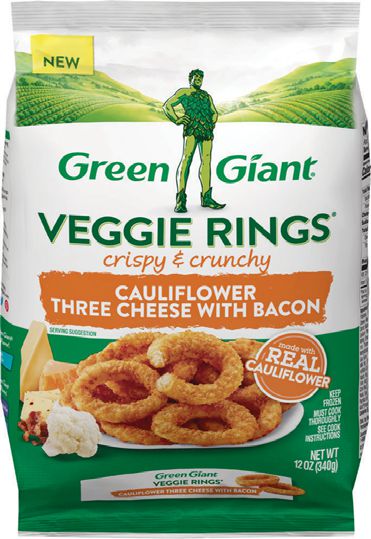
Coming later this year, Green Giant Cauliflower Breadsticks will be the first such product available for retail sale.
The plant-based and low-carb trends combined with a whole host of innovative new products were already driving growth in the frozen veggie segment. But when the coronavirus hit in early March and consumers started stockpiling frozen foods, vegetable sales skyrocketed, outperforming the department as a whole by a fair margin. During the 12 weeks ended April 19, reports Chicago-based market research firm IRI (iriworldwide.com), total plain vegetable sales shot up 34.3% (vs. 28.2% for the frozen department as a whole) to $858.56 million across channels. Even the slumping prepared vegetables category saw sales jump 7.4% to $59.12 million.
But will shoppers keep buying frozen veggies post-pandemic? Manufacturers think so. “We’ve made significant investments…to improve quality and contemporize our [frozen] food, so we think consumers who stocked up have been pleasantly surprised by the Birds Eye products that they’re eating today,” says Ashley Lind, director of demand science for Chicago-based Conagra (birdseye. com). Novice cooks in particular also appreciate the convenience of frozen veggies. “Throughout the pandemic,” explains Lind, “we’ve seen younger consumers…cooking more and starting to develop culinary skills but also looking for shortcuts and hacks. Frozen vegetables are perfect for that.”
“There’s just more positive sentiment around frozen in general,” continues Sam Dennigan, founder and CEO of New York-based Strong Roots USA (strongroots.com), citing the lack of waste and frozen-at-the-peak-of-freshness quality of frozen vegetables. And if we’re headed for a recession as many economists predict, he says, frozen veggies are more affordable than fresh.
While new forms (riced, spiralized, etc.) have already reinvigorated the frozen veggie category, manufacturers are just getting started. Carb swaps continue to grow on restaurant menus (+21% versus year ago) and in supermarkets (+83%), prompting Conagra to expand its Birds Eye riced cauliflower lineup with two new varieties, Spanish Rice and Fried Rice, the latter of which boasts real eggs for more authentic flavors, says brand director Melissa Walters.

Birds Eye rolls out several veggie-based frozen appetizers plus a new pair of riced cauliflower dishes.
She also sees growing demand for more elevated, restaurant- inspired veggie dishes, sparking the development of new “steakhouse sides.” Expected to debut later this year, the “decadent” Birds Eye baked side dishes include Brussels Sprouts & Bacon, Loaded Potato Bake, Creamed Spinach and Broccoli & Cheddar.
But some of the most innovative restaurant- inspired veggie dishes are popping up in the snacks and apps category, where Walters says traditional products such as onion rings are declining on menus (-4.6% over the last four years) in favor of “more modern” offerings like crispy green beans (+3.6%) and cauliflower wings (+100%). For consumers who want to enjoy those same items at home, Birds Eye is rolling out frozen versions, including Cauliflower Wings, Broccoli Bites and Zucchini Fries. “These are great alternatives to traditional apps and can also be a great side dish,” says Walters.
Strong Roots is also seeing more interest in veggie-based appetizers, which coincides with the growing demand for healthier hot snacks. In fact, the company’s Spinach Bites and Broccoli & Purple Carrot Bites recently debuted nationally in Whole Foods, reports Dennigan. “We’re seeing a lot of our products used for kids,” he continues, “so in the U.K., we recently launched a new apps line under the sub-brand Little Roots that includes small bites aimed at children.” If the line takes off as expected, he hopes to bring it to the U.S. market in the future. Same for the company’s new “Proper Chips,” Strong Roots’ first potato-based SKU. Made with just three ingredients and “next-to-no fat,” the fries are “the most nutritionally balanced offering in the category,” says Dennigan.
While veggie-based appetizers are clearly the hottest trend in the marketplace right now, Parsippany, N.J.- based B&G Foods, owner of the Green Giant (greengiant.com) brand, is taking vegetables into a new category: frozen bread. “We are very excited to introduce Green Giant Cauliflower Breadsticks,” reports executive vp and chief commercial officer Jordan Greenberg, who says they’re the first such product available for retail sale. Offered in both Original and Garlic flavors, the cauliflower-based breadsticks boast a fresh-baked flavor once cooked – and they’re gluten-free. “We believe that’s a very important attribute as there are limited options in the market today for consumers who seek gluten-free frozen products,” says Greenberg.
While some shoppers seek veggie-based products free from ingredients like gluten and GMOs, others are looking for innovative, functional foods that incorporate beneficial ingredients, reports Ashley Collins, brand manager at Naperville, Ill.-based Path of Life (pathoflife.com). To meet that demand, the company debuted a line of nutrient-dense, ethnic-inspired rice blends last fall, including Cilantro Lime Rice Blend, Saffron Rice Blend and Ancient Grains & Seed Blend. “These dishes come pre-packed with flavor and nutrition without the need to add any ingredients,” she says.
What can retailers do to make sure frozen veggies remain top of mind post-pandemic? For starters, says Greenberg, they should consider giving the growing category more space, especially given all the innovative new items manufacturers are rolling out. But that doesn’t mean every new veggie-based product should go in the frozen vegetable set. Cauliflower hash browns should go in the frozen breakfast or frozen potato doors, zucchini fries and cauliflower wings should go in the frozen appetizers section and those new cauliflower breadsticks should go in the frozen bread set – because that’s where consumers are looking for veggie- based alternatives to those conventional items. Proper placement also preserves space in the primary set for traditional frozen vegetables, whose sales are stronger than ever.
Manufacturers also recommend retailers consider secondary displays. While he would love to see frozen veggies merchandised next to fresh produce, Dennigan says there are other opportunities to move frozen vegetables out of the freezer aisle to “impulse locations” that make more sense from a meal preparation standpoint. “In the Irish market, we pioneered putting frozen [veggies] in the protein section…and it really works. People think about frozen vegetables differently when they see them in a different place,” he explains.
Manufacturers would also like to see retailers better highlight different uses for frozen vegetables. “They don’t need to be relegated to merely a side dish,” says Trey Taylor, vp of marketing for Manitowoc, Wis.-based Lakeside Foods (lakesidefoods.com). “They’re also perfect in casseroles, soups, sauces, and dips. Offering recipes, pairing tips and multi-item meal promotions are all ways to further showcase the versatility and convenience of frozen vegetables.” In addition, he says, many consumers are looking for products they can prepare in on-trend appliances like instapots and air fryers, so retailers should highlight ways frozen veggies can be used in them.
Finally, says Dennigan, retailers and manufacturers should continue to find ways to get newer frozen veggie options in consumers’ mouths because many aren’t aware of just how tasty these products are. While in-store demos may not be back for a while, Strong Roots recently launched a pilot program delivering cooked samples of its veggies from a dark kitchen so consumers can try before they buy.
Sales in supermarkets, drugstores, mass merchants, military commissaries and select club and dollar stores combined for the 12 weeks ended April 19, according to Chicago-based market research firm IRI (iriworldwide.com). Percent change is versus the same period a year ago.

[hr]
[dflip id=”11573″ type=”thumb” ][/dflip]
View PDF
[hr]
Advertisement







Advertisement


#1 IN AD REVENUE
TARGETED READERS
AWARD WINNING
