- Print Magazine
- Digital Magazine
- Newsletter

Advertisement
Category Spotlights
Dollar sales of frozen Asian foods in natural and conventional channels combined dropped 4.0% to $338.03 million while unit sales fell 2.8% in the 12 weeks ended April 21, reports Chicago-based market research firm SPINS. Despite overall losses, a few subcategories gained ground, most notably several types of dumplings, including potstickers/wonton/gyoza (+5.6%), “other Asian” dumplings (+88.4%) and bao/steamed buns (+271.9%). In the frozen meal and entrees category, meanwhile, Indian and curry-based items registered 24.6% and 32.3% dollar gains, respectively.
Industry observers say frozen Asian food consumers are looking for restaurant favorites that they can replicate at home, and they view meals that are quick to prepare and healthier than takeout as an added bonus.

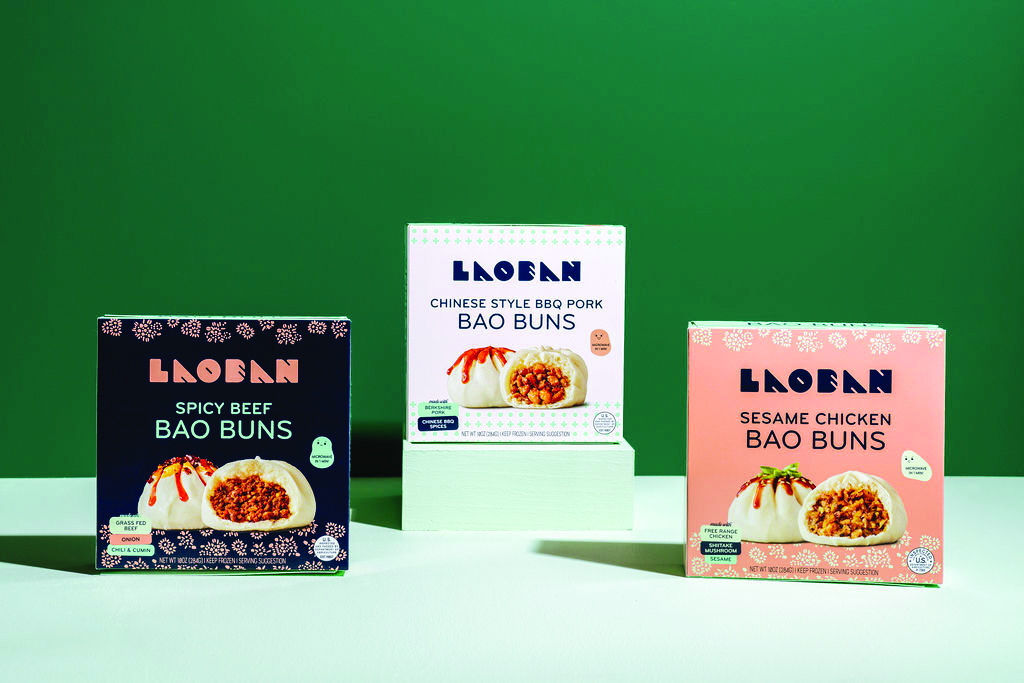
Laoban moves beyond dumplings with its new
Bao Buns, still a rarity in the frozen aisle.
“Customers are looking for more restaurant quality products. They don’t want to sacrifice taste for convenience,” confirms Brandon Tammaro, vp of strategic growth at Chicago-based Wow Bao, an Asian fast-casual concept that was established more than 20 years ago. “We have perfected our [frozen] bao and use the same recipe for our CPG line as we use in our restaurants,” he adds.
‘Customers are looking for more restaurant quality products. They don’t want to sacrifice taste for convenience.’
Most recently, the company added Ginger Chicken Potstickers and Chicken and Pork Soup Dumplings to its at-home lineup. Though it’s known for bao buns, “We’re adding potstickers because they have consistently been a top-selling item in our restaurants,” he explains. “And soup dumplings have seen a surge in popularity in the last year. They’re something we carried in our restaurants before and always wanted to bring [to frozen]. The timing was right, and the demand is there.”
Like the company’s bao buns, the frozen potstickers are made from the same recipe used in the restaurant, with roasted chicken, fresh ginger and scallions, and other spices. The soup dumplings, also the same as the restaurant version, are fully cooked, which sets them apart from most on the market. They are ready to eat in under two minutes from the freezer.

Sobo offers a healthy twist on a restaurant favorite with its
new vegan Ginger “Chicken” Dumplings.
While Wow Bao is moving into frozen dumplings, Laoban Dumplings, which operates a brick-and-mortar shop in Washington D.C., recently added bao buns to its frozen lineup. “Our dumplings and buns are developed by five-time Michelin awarded chef Tim Ma and made the same way we make them in our restaurants,” says J. Patrick Coyne, co-founder and CEO. “We added bao buns because they’re an incredibly convenient and satisfying way to get incredible flavor. They’re not super common in American grocery stores, so we’re very excited to be able to deliver this format to more people via the frozen aisle.”
Another restaurant brand, P.F. Chang’s Home Menu, from Chicago-based Conagra, is also expanding its presence in Asian appetizers, adding a 16-ounce family-size package of its popular Pork Dumplings. “Consumers want more bang for their buck, so larger packages are driving growth,” says brand director Ayesha Narula.
Honolulu-based Sun Noodle, another company taking inspiration from Asian restaurants, has spent four decades supplying chefs and restaurant operators. It’s taken the lessons it’s learned and developed a line of make-at- home ramen meal kits.
“We listen to our consumers and grocery store buyers, and they are asking for convenient, authentic experiences,” says Kenshiro Uki, president of Sun Noodle North America. The company is focused on developing fresh, quality noodles paired with a soup base that is easy for the home cook to make. However, “We will be adding a new product line in Q4 that brings the ramen shop experience home…[with] a meal kit with toppings.”
Mona Ahmad, CEO of Saugus, Mass.-based Mona’s Curryations, also believes that consumers are looking for restaurant-inspired favorites that they can make at home. Currently, the company offers four meal kits (Chicken Tikka Masala, Palak Paneer, Chickpea Tikka Masala and Tandoori Chicken) that can be prepared on the stovetop or in an Instant Pot. But Ahmad says retailers should look for new Pakistani /Indian ready-to-cook, create, heat, and eat products in 2025.
Consumers are craving healthy, yet convenient foods, according to Kevin McCray, founder of Stockton, Calif.- based Kevin’s Natural Foods. “That inspired us to launch our most convenient offering yet in April: Kevin’s single-serve frozen entrées,” he explains. “We pair our sous-vide proteins and signature sauces with vegetables and starches like cauliflower pasta, rice cauliflower, and brown rice all together in one microwaveable bowl.”
Among the eight SKUs are three Asian entrees: Thai- Style Coconut Chicken, Korean BBQ-Style Chicken and Orange Chicken. Offered in a 100% compostable fiber bowl, all three contain more than 20 grams of protein, meat raised without antibiotics and no refined sugar. Plus, they’re certified gluten free.

Conagra adds two new — and one “refurbished” — protein-only multi-serve entrees to its P.F. Chang’s Home Menu lineup.
Like Kevin’s, San Francisco-based dumpling maker Sobo is courting consumers with healthy versions of culturally relevant comfort foods. “Even when they’re eating convenient frozen foods, consumers do not want to make any sacrifices on either health/nutrition or nostalgic, comforting flavors,” says Eric Wu, co-founder and CEO. “Younger customers recognize that ethnic foods — particularly ones found in the frozen aisle — no longer have to be loaded up with sugar, fat and salt. They see no reason why ethnic comfort foods have to be full of cheap, factory-farmed meat and devoid of veggies.”
The most recent addition to the Sobo frozen dumpling lineup is Chinese-inspired, plant-based Ginger “Chicken” dumplings. “Our recipes are inspired by nostalgia, but crafted with the future in mind,” says Wu. “Ginger chicken is a staple of the classic Chinese American takeout restaurant, but we’ve reinvented it with 19 grams of plant-based protein, 9 grams of plant-based fiber, and tons of California-grown veggies like hearty chickpeas, vibrant ginger, and bright carrots.”
Sometimes it’s not so much the ingredients that make a food unhealthy but the method of preparation. Historically, many Asian appetizers were fried, says Miki Kim, senior brand manager at Hackensack, N.J.-based Daesang America. But that’s starting to change.
“According to one of the latest trend reports, 63% of households now own an air fryer, which is 27% higher than in 2020,” she reports. “This surge reflects a broader movement toward healthier cooking methods, as air fryers use significantly less oil than traditional frying methods while still delivering that desired crispy texture.”
Kim says Daesang America is strategically expanding its product range to include frozen Asian appetizers, desserts and main courses specifically designed to be air fryer-friendly. The latest addition to the frozen lineup is a range of authentic, ready-to-cook main courses, including three unique and distinct dishes: Korean Inspired Crispy Battered Chicken with Gochujang, Soy Sesame and Honey Garlic.
“I believe the market is ready for a shake-up,” says Kim. “We suggest that retailers present these meals in a dedicated ‘Air Fryer Essentials’ section as we constantly promote air fryer-inspired recipes on our social media platforms. The feedback we received from our social media channels on these recipes has been very positive, as consumers are always looking to add variety to their weeknight dinner rotation.” She adds, “In-store demonstrations or taste testings could be very effective, allowing customers to experience firsthand how easy and delicious these meals are.”
‘We suggest that retailers present these meals in a dedicated Air Fryer Essentials section.’
In May, Chicago-based Conagra added two protein-only meals — Crispy Sesame Chicken and General Chang’s Crispy Chicken — to its P.F. Chang’s Home Menu lineup and relaunched its Honey Chicken protein-only meal.
“They have been crafted for oven or air fryer prep, which delivers the crispy breaded chicken experience that consumers prefer,” says Narula. All three dishes feature tempura-breaded white meat chicken with popular, restaurant-inspired sauces, offering the versatility some consumers prefer. “They can build a meal the way they want it,” says Narula.

Saffron Road combines bold
flavors with high-quality, ethically sourced ingredients in three new Korean entrees.
But for those who want a ready-made solution, P.F. Chang’s is adding three new dishes made with tempura chicken to its single-serve bowl collection: Sweet & Sour Chicken, Orange Chicken and General Chang’s Chicken. “We’ve unlocked tempura for the microwave,” says Narula, who notes that Asian single-serve meals are growing 1.4 times faster than total single-serve meals.
According to Megan Elliott, senior marketing manager for bibigo at Bloomington, Minn.-based Schwan’s Consumer Brands, retail sales of the brand have skyrocketed. And she doesn’t expect that momentum to die out any time soon.
Two new bibigo potstickers — Chicken & Vegetable and Vegetable — hit the market in April when the company also debuted a redesigned logo. “It’s a new look but still the same authentic Korean products that deliver convenience, quality and great taste,” says Elliott. “The new logo celebrates the energy and excitement of people sharing great experiences through food. It also embodies the spirit of our Live Delicious campaign, where food has the power to enrich lives.”
Stamford, Conn.-based Saffron Road, which offers an array of international Halal-certified frozen entrees, is expanding its Korean cuisine offerings with the introduction of three new meals: Vegetable Bibimbap, Drunken Noodles and Korean Fire Roasted Chicken with Spinach, the latter of which highlights another key Asian food trend.
Until recently, many frozen Asian foods were a bit bland — and definitely not hot. At Chicago-based Food Dreams Made Real (previously known as Suji’s Asian Cuisine), the rule was to temper the spiciness of traditional recipes in order to appeal to the broadest possible audience. But that’s all changing. Executives at the company are seeing increased interest in global flavors and especially those that bring the heat. In response, Food Dreams Made Real is introducing The Golden Bao, which comes in two flavors: Spicy Korean Pulled Chick and Chinese 5-Spice Diced Pork.

Wow Bao introduces Ginger Chicken Potstickers made from the same recipe as the ones served in its restaurants.
Wow Bao is also jumping on the hot trend with a new flavor rolling out at Meijer stores this month: Szechwan-Style Spicy Pork. The signature bun is filled with pork, cabbage, ginger, garlic and chili crisp-gochujang sauce. “Our culinary team debuted this flavor due to the recent popularity of spicy products across the marketplace,” says Tammaro. “It’s just the right amount of heat while maintaining the traditional Szechwan flavor.”
Wow Bao is looking beyond traditional marketing and social media initiatives to attract a new generation of customers. Recently, it launched the Wow Bao Dim Sum Palace experience on Roblox.
“Roblox is the primary social network for Gen Alpha and younger Gen Z, with 72 million daily active users that spend 2.4 hours per day on the platform. These users have purchased more than 16 million virtual items. For brands like Wow Bao, it’s notable that 50% of Roblox users who try on a brand’s virtual items are very or extremely likely to consider the brand in the physical world,” says Tammaro. He adds that after players unlock clues within the experience, they can claim a free UGC (user-generated content) accessory, free Wow Bao products, and a chance to win Wow Bao for a year. “The gaming experience fully integrates Wow Bao’s rewards program in the metaverse, allowing users to sign up to our Hot Buns Club,” says Tammaro.
Sobo is adopting a “boots-on-the-ground” marketing plan. The team takes its dumplings on the road to Asian-American cultural occasions, vegan food festivals, beer and wine festivals, as well as grocery stores, throughout the San Francisco Bay area.
“Every cent that we invest into in-person integrations, a personal conversation, and a tasty bite is worth more to us than any sort of online advertising,” says Wu. “We see Sobo as an omnichannel brand, capable of selling into traditional brick-and-mortar grocery stores, but also across other channels like foodservice, direct-to-consumer, and online grocery.”

Advertisement







Advertisement


#1 IN AD REVENUE
TARGETED READERS
AWARD WINNING
